
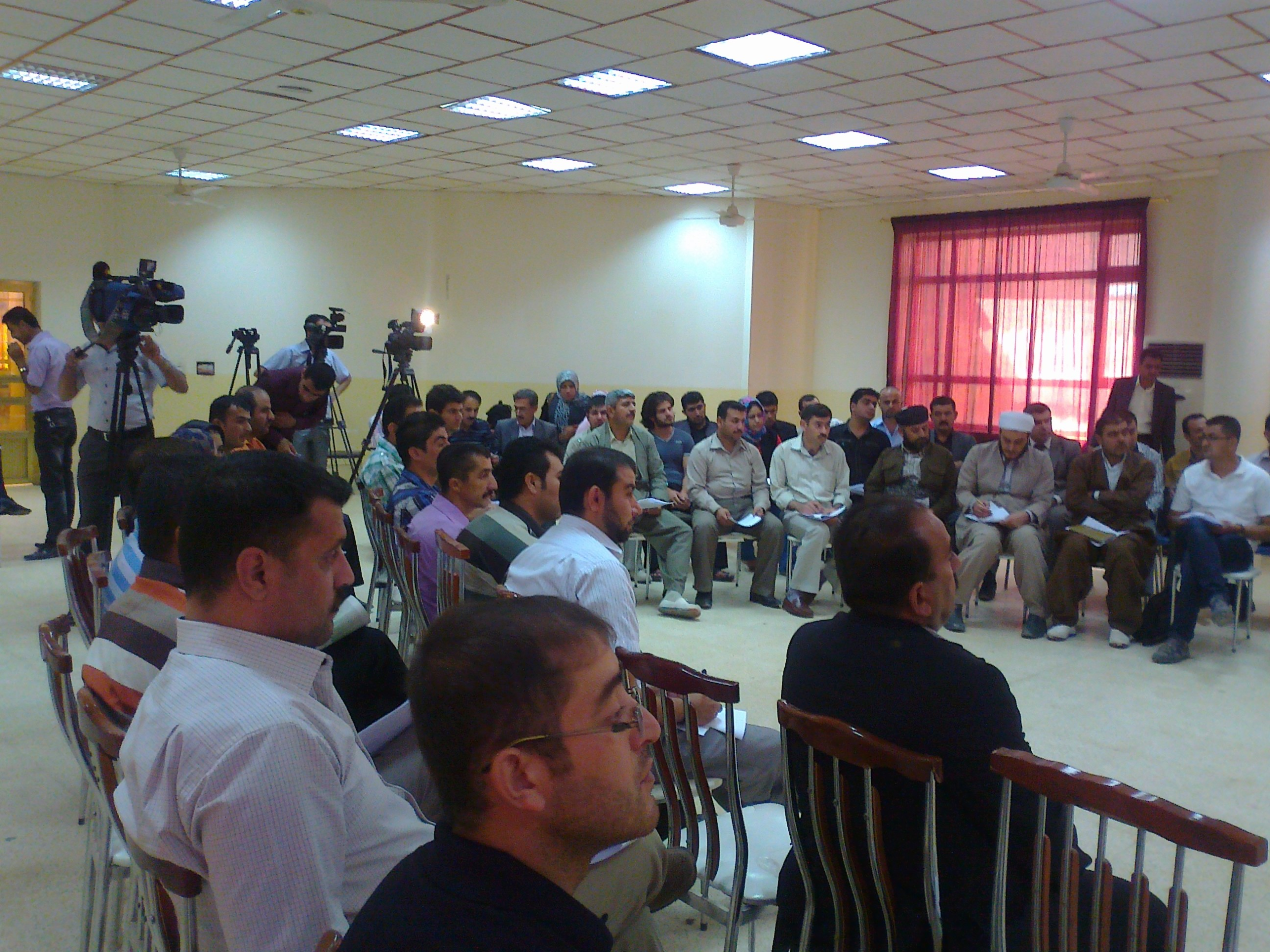
Climate change is increasingly affecting communities across the Kurdistan Region of Iraq, creating new challenges for livelihoods, agriculture, water resources, public services, and community wellbeing. In Chamchamal District, communities are experiencing the impacts of heat waves, water scarcity, flooding, dust storms and changing weather patterns, while local stakeholders face challenges in coordinating responses and developing practical adaptation measures.
Recognizing the need for locally driven solutions, the Community Action Group, consisting of the IRO Organization for Community Development and Aran Organization, in partnership with Charmo University in Chamchamal, has initiated a process to strengthen community-led adaptation, climate resilience and local coordination.
Bringing Local Stakeholders Together
The initiative is based on the understanding that effective climate adaptation cannot be achieved by one institution or organization alone. It requires the participation and shared commitment of the people and institutions directly affected by climate change.
The Community Action Group therefore brought together a diverse range of stakeholders, including representatives of civil society organizations, government institutions, community leaders, journalists, youth and women, farmers, private-sector representatives, academics and other local actors.
Particular efforts were made to engage relevant government institutions, including the Directorate of Agriculture and the Directorate of Irrigation and Water Sources, recognizing their important roles in addressing the impacts of climate change on agriculture, water management and rural communities.
The initiative seeks to create a space where different stakeholders can share their experiences, identify common challenges and explore practical solutions based on local realities and community priorities.
An Open Dialogue as the First Step
The process began with an open dialogue that brought together representatives from the different stakeholder groups.
The dialogue provided an opportunity to discuss the climate-related challenges facing Chamchamal and surrounding communities, including water scarcity, extreme heat, flooding, dust storms and their impacts on agriculture, livelihoods and daily life.
Participants also discussed the importance of improving coordination among local actors and establishing a more systematic approach to climate adaptation.
Rather than developing solutions from outside the community, the dialogue focused on listening to local knowledge, experiences and priorities and creating a shared understanding of the challenges facing the area.
The discussion highlighted the need to move from fragmented responses towards a more coordinated and locally owned approach to climate adaptation and resilience.
Establishing a Steering Committee
Following the initial dialogue, stakeholders agreed on the importance of maintaining the process and ensuring continued coordination.
A steering committee was therefore established to help coordinate the activities, facilitate communication among stakeholders and guide the next stages of the initiative.
The committee provides a platform for continued engagement between civil society, government institutions, academia, communities, farmers, youth, women, media and other relevant actors.
This participatory structure is intended to ensure that climate adaptation remains a shared local responsibility, while also creating opportunities for stakeholders to contribute according to their knowledge, experience and institutional role.
From Dialogue to Action
The initiative is now moving from dialogue towards practical planning.
The steering committee has drafted a work plan for the next stage of the process, which includes organizing a wider stakeholder meeting to strengthen coordination and further discuss the climate challenges and adaptation priorities of the area.
The planned meeting will bring together a broader group of stakeholders to identify priority areas for action and explore how different institutions and community actors can work together more effectively.
An important expected outcome of this process is the development of a set of community-informed recommendations addressing key climate adaptation and resilience needs in Chamchamal. These recommendations will be shared with relevant authorities and stakeholders to support future planning, programming and decision-making.

Strengthening Local Ownership of Climate Adaptation
The Community Action Group believes that climate adaptation should not be limited to technical plans developed at higher levels. Communities need to have a meaningful role in identifying risks, defining priorities and shaping the solutions that affect their lives and livelihoods.
Community-led adaptation can help connect local knowledge with institutional expertise and government planning. It can also strengthen accountability, coordination and ownership of climate action.
For Chamchamal, this approach is particularly important as climate pressures are becoming more visible and are affecting different sectors and groups in different ways. Farmers face increasing pressure on water availability and agricultural production, communities are exposed to extreme weather events, and local institutions are increasingly required to respond to complex and interconnected challenges.
The initiative therefore aims to establish a foundation for more coordinated, inclusive and locally appropriate climate action.
Looking Ahead
The Community Action Group sees this process as a starting point rather than a one-time activity.
The longer-term vision is to strengthen a local platform through which stakeholders can continue to exchange information, identify emerging climate risks, coordinate actions and advocate for practical adaptation measures.
Through continued collaboration among civil society, government, academia, communities, farmers, youth, women, media and the private sector, the initiative aims to contribute to a more resilient Chamchamal where local communities are not only recipients of climate interventions but are active partners in shaping them.
The experience also demonstrates the importance of locally led adaptation in the Kurdistan Region and Iraq, where community knowledge, local institutions and civil society can play an important role in translating climate challenges into practical and locally relevant action.
Sustaining action
The Community Action Group will continue working with local stakeholders to turn dialogue into coordinated action and to ensure that the voices and priorities of affected communities are reflected in future climate adaptation and resilience efforts.